Business Computer Support
QuickBooks and Accounting Access Cleanup for Colorado Businesses
Accounting work is where small technology shortcuts can become expensive interruptions. A Fort Morgan contractor may keep QuickBooks on one aging office computer. A Sterling clinic may have payroll exports in a shared folder. A Brush shop may let several people use the same accounting login because it is faster during a busy week. Those habits usually start for practical reasons, but they can leave invoices, bank records, vendor files, payroll details, and tax documents harder to protect and harder to recover. For businesses across Northeastern Colorado, cleaning up accounting access is one of the most useful IT projects to handle before a computer fails or an employee changes roles.
By RightCyber Solutions · 2026-07-31
Quick takeaways
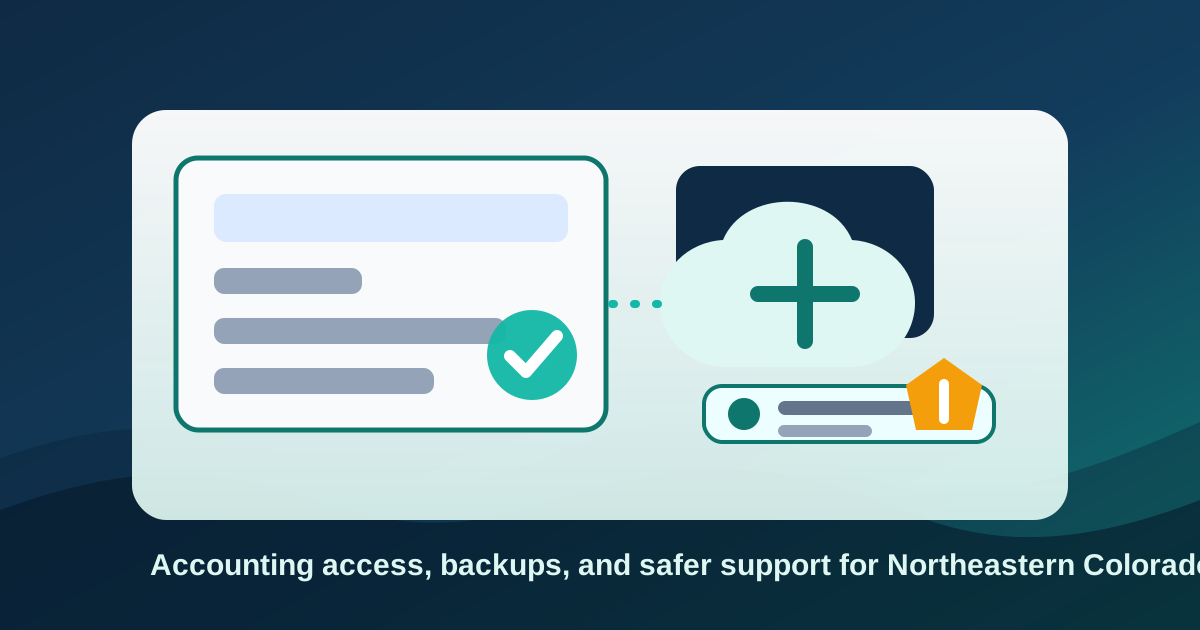
- Accounting computers often hold QuickBooks files, payroll exports, bank downloads, scanned invoices, saved passwords, and shared folder shortcuts that deserve a closer review
- Named users, MFA, role-based permissions, and clean offboarding reduce the chance that former staff or shared logins can reach sensitive accounting records
- Backups should be tested for the accounting file, not just assumed because a general backup tool is installed somewhere
- RightCyber helps Northeastern Colorado businesses support accounting workstations, file access, cloud accounts, backups, and day-to-day computer issues without turning the office upside down
Accounting data usually spreads farther than one program
Owners often think of accounting security as a QuickBooks question, but the real work touches more places. There may be company files on a workstation, attachments in email, payroll reports in downloads, bank statements in a shared folder, invoice scans from a copier, and accountant copies sent back and forth during tax season.
That spread makes troubleshooting harder. If the only person who understands the setup is out for the day, a broken shortcut or failed update can stop billing, payroll, or deposits. If the business does not know where the current file lives, it may also be difficult to confirm whether backups are protecting the right information.
A good cleanup starts by mapping the accounting workflow: where the active files are stored, who opens them, which devices are trusted, which outside professionals need access, and which old paths can be removed.
Shared logins create messy accounting records
A shared Windows login or shared accounting account may feel harmless in a small office, especially when people are trying to help customers and keep invoices moving. The problem shows up later when nobody can tell who changed a vendor record, exported a report, deleted a file, or saved a password in the browser.
Named users make accounting work easier to review. Each person should have access that matches the job they actually do, and sensitive tasks such as payroll, bank connections, administrator settings, and file exports should not be available to everyone by default.
When an employee leaves or changes roles, offboarding should include the accounting program, computer login, email, shared folders, remote access, password manager, and any accountant or bookkeeping portal. The goal is not suspicion. The goal is clean records and fewer surprises.
Backups need proof, not hope
Many businesses believe the accounting computer is backed up because a drive is plugged in, a cloud icon is running, or a vendor installed something years ago. That may be true, but accounting files deserve a specific check. Is the live company file included? Are attachments included? How often does the backup run? Has anyone restored a copy recently?
A backup that has never been tested can fail at the worst moment. The business may discover that the file was open during backup, the wrong folder was selected, the external drive stopped working, or the cloud sync copied a damaged file after a crash.
RightCyber encourages owners to test a restore before there is an emergency. A short verification can confirm that invoices, payroll records, customer balances, and current transactions are recoverable if the accounting computer fails.
Remote accounting access should be narrow and documented
Remote access is common when an owner checks numbers from home, a bookkeeper works from another town, or an accountant needs records before a deadline. It should not depend on an old remote-control tool, a reused password, or a computer left open so anyone with the link can connect.
Safer remote accounting access uses named accounts, MFA where available, device rules, limited permissions, and a written list of who can connect. Temporary access for accountants, vendors, or seasonal help should have an end date instead of staying active for years.
This is especially important for businesses with more than one location or staff traveling between Fort Morgan, Sterling, Brush, Wiggins, Greeley, Brighton, and nearby communities. Remote work can be convenient without giving too many people a permanent door into accounting records.
Updates and workstation health affect bookkeeping days
Accounting workstations often run quietly until a Windows update, printer change, bank feed issue, or old hard drive turns a normal bookkeeping day into a scramble. Because the machine may be used by only one or two people, it can miss the same review given to other office computers.
A healthy accounting workstation should have current security updates, working antivirus, disk health checks, stable network access, a documented printer and scanner setup, and enough capacity to run the accounting program reliably. If the computer is old, the replacement plan should happen before it becomes urgent.
Support notes matter too. The business should know which program version is installed, where license information is kept, which printers are used for checks or invoices, and who to call if an update breaks something before payroll or billing is finished.
Cloud folders and email attachments need boundaries
Accounting teams often move files through email, shared drives, and cloud folders because it is quick. That convenience can expose sensitive records when a folder is shared too broadly, an old accountant still has access, or tax documents are attached to long email threads.
The same review should include Microsoft 365 or Google Workspace accounts, shared mailboxes, OneDrive or Google Drive folders, copier scan destinations, and any bookkeeping portals that hold exports or reports. Access should match current roles, not old habits.
A cleaner setup gives owners confidence that payroll reports, W-9 forms, bank documents, and customer invoices are not scattered across personal downloads, retired accounts, or shared folders with no owner.
Make accounting support part of normal business IT
Accounting technology should not be treated as a special island that only gets attention during tax season or after something breaks. It connects to computers, printers, scanners, firewalls, cloud accounts, remote access, backups, and cybersecurity policies like the rest of the office.
RightCyber Solutions helps Northeastern Colorado businesses clean up accounting access, support QuickBooks workstations, verify backups, document remote access, review shared folders, and coordinate with bookkeepers or accountants when needed.
If one computer, one shared password, or one unknown backup is carrying the financial side of the business, it is worth tightening the setup while everything is still working.
FAQ
Should QuickBooks be stored on one office computer?
It depends on the business, version, number of users, and backup plan. If one workstation holds the active company file, the business should know exactly where the file lives, how it is backed up, who can open it, and how work continues if that computer fails.
How often should accounting file backups be tested?
Accounting backups should be tested on a regular schedule and after major changes such as moving the company file, replacing a computer, changing users, or adjusting cloud storage. A test restore is the best proof that the right records can be recovered.
What should be removed when an accounting employee leaves?
Remove or adjust computer login access, accounting program access, email, cloud folders, shared folders, remote access tools, password manager entries, scanner destinations, and any bookkeeping or payroll portals tied to that role.
Can RightCyber help coordinate with our bookkeeper or accountant?
Yes. RightCyber can help document the technical setup, support computers and accounts, verify backups, and coordinate access changes with outside bookkeepers, accountants, or software vendors for businesses in Northeastern Colorado.