Network Security
Business Network Security and Wi-Fi Planning
A reliable network should feel almost invisible. Employees can reach the tools they need, guests can use Wi-Fi without touching company systems, phones and printers behave, and owners are not guessing whether the firewall is protecting the business. For Fort Lupton companies, a practical network review can reduce daily interruptions and close security gaps before they turn into emergencies.
By RightCyber Solutions · 2026-07-18
Quick takeaways
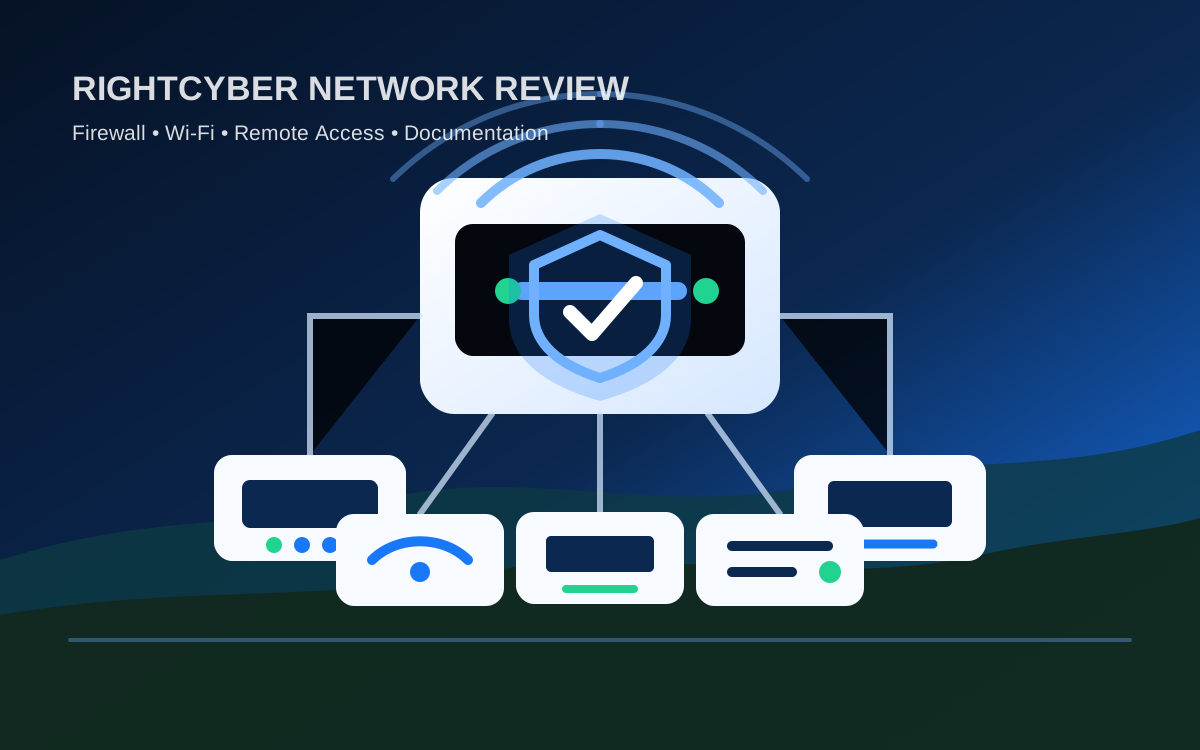
- Business Wi-Fi should separate employees, guests, phones, cameras, and other devices when appropriate
- Firewall rules, remote access, and vendor connections need clear ownership and regular review
- Network documentation makes outages, moves, and device changes easier to handle
- RightCyber helps Fort Lupton and Northeastern Colorado businesses build secure networks that are easier to support
Network problems usually show up as everyday frustration
A network issue is rarely described as a network issue at first. Employees say the internet is slow, the point-of-sale system freezes, phones drop calls, printers disappear, security cameras lag, or cloud applications work in one room but not another. Those symptoms are frustrating because they interrupt real work and are hard to diagnose without a clear picture of the environment.
For a Fort Lupton business, the network may support office staff, warehouse devices, shop equipment, payment systems, guest Wi-Fi, cameras, phones, and field employees who connect remotely. If the setup grew piece by piece over several years, it may work most days while still being difficult to secure or troubleshoot.
A good network review starts with how the business operates. Which systems are critical? Which areas need reliable Wi-Fi? Which devices should never touch sensitive company data? Which vendors have access? Answering those questions turns a confusing tangle of equipment and settings into a supportable business system.
Guest Wi-Fi should not be the same as company access
Guest Wi-Fi is useful for customers, vendors, visitors, and personal phones, but it should not give guests the same access as employees. A visitor who only needs internet access should not be able to reach file shares, printers, business applications, cameras, or office devices.
Separating guest traffic from business traffic is one of the simplest ways to reduce unnecessary exposure. The same idea can apply to phones, cameras, payment terminals, smart TVs, shop equipment, and other devices that need connectivity but do not need broad access to the company network.
This does not have to make the workday harder. The goal is a clean setup where employees connect to the right network, guests have a simple password or portal, and devices are grouped in a way that makes sense for security and support.
Firewall settings should match the way the business works
The firewall is often treated like a box that gets installed and forgotten. Over time, temporary rules, old vendor access, remote desktop exceptions, port forwards, and abandoned VPN accounts can remain in place long after the original reason is gone.
A firewall review should identify what is allowed into the network, what leaves the network, which users can connect remotely, which vendors have access, and whether logging is useful when something looks suspicious. It should also confirm that firmware updates, backups, administrator passwords, and alert settings are being maintained.
RightCyber can help Fort Lupton businesses review firewall rules, remove old exceptions, document vendor access, improve remote access security, and connect firewall management with broader managed cybersecurity support.
Wi-Fi coverage is about placement, interference, and capacity
Weak Wi-Fi is not always fixed by buying a stronger access point. Building layout, metal walls, neighboring networks, outdoor spaces, device density, cabling, and access point placement all affect performance. A setup that worked for a small office may struggle after adding more employees, cameras, phones, tablets, or cloud applications.
A practical Wi-Fi plan looks at where people work, where devices move, which systems are most sensitive to drops, and whether the network equipment can handle the load. It may include better access point placement, cleaner cabling, updated switching, separate networks, or improved monitoring.
The result should be simple for the team: fewer dead zones, fewer mystery disconnects, and a clearer path when something changes. Good Wi-Fi planning also helps avoid unsafe shortcuts, such as employees using personal hotspots because the business network is unreliable.
Remote access needs stronger protection than a password alone
Remote access can be necessary for owners, managers, vendors, bookkeepers, and employees who work away from the office. But remote access also creates risk if it relies on weak passwords, shared accounts, exposed services, or accounts that no one reviews after a role changes.
A safer approach uses named users, multifactor authentication, limited permissions, clean device requirements, and a documented approval process. The business should know who can connect, why they need access, what systems they can reach, and how access is removed when it is no longer needed.
This is especially important when outside vendors support accounting software, security cameras, industry applications, or specialized equipment. Vendor access should help the business, not leave a permanent unlocked door.
Documentation makes every future fix faster
Many network outages take longer than they should because no one knows what is plugged in where, which device runs DHCP, which switch feeds the phones, where the firewall backup is stored, or who manages the internet circuit. Documentation is not paperwork for its own sake. It is how the business avoids guessing during an outage.
Useful documentation can be straightforward: internet provider details, firewall model, switch locations, access point map, Wi-Fi names, network segments, important IP addresses, vendor contacts, admin ownership, and backup procedures. It should be current enough that someone can use it when the primary person is unavailable.
For growing Fort Lupton companies, documentation also makes office moves, remodels, new hires, device replacements, and vendor changes less disruptive. The business can plan instead of rediscovering the network one cable at a time.
Use a network readiness review before the next outage
If the network has become a source of daily complaints, the best next step is a focused readiness review. Identify the equipment in use, map critical connections, check firewall and Wi-Fi settings, review remote access, separate guest traffic where needed, and document the pieces that would matter during an outage.
That review can point toward managed IT services, infrastructure upgrades, managed cybersecurity, backup planning, or simply a cleaner support process. The right answer depends on what the business actually relies on and where the biggest interruptions or risks are showing up.
RightCyber Solutions helps Fort Lupton and Northeastern Colorado businesses make networks safer, clearer, and easier to support. If your team depends on Wi-Fi, cloud tools, phones, cameras, or remote access every day, a practical network review can give you a better foundation before the next busy season or unexpected outage.
FAQ
What should a Fort Lupton business check first in network security?
Start with guest Wi-Fi separation, firewall rules, remote access users, vendor connections, admin passwords, firmware updates, Wi-Fi coverage, and basic documentation for critical network equipment.
Should guest Wi-Fi be separated from employee Wi-Fi?
Yes. Guest Wi-Fi should provide internet access without allowing visitors to reach company files, printers, business applications, cameras, payment systems, or office devices.
How often should firewall rules be reviewed?
Firewall rules should be reviewed after vendor changes, employee departures, new remote access needs, internet service changes, and at least periodically so temporary exceptions do not become permanent risk.
Can RightCyber help improve Wi-Fi and firewall management?
Yes. RightCyber helps Fort Lupton businesses with network reviews, Wi-Fi planning, firewall cleanup, remote access security, documentation, managed IT services, and managed cybersecurity support.