Managed Cybersecurity
Email Forwarding Rule Cleanup for Colorado Businesses
Email is where many business problems start: invoices, customer requests, payroll messages, vendor conversations, password resets, and file approvals all move through the inbox. When a mailbox has hidden forwarding rules or old delegate access, a criminal does not need to break into every system. They may only need one account that quietly copies messages somewhere else. For businesses in Fort Morgan, Sterling, Brush, Wiggins, Greeley, and the surrounding communities, a mailbox cleanup can catch those quiet risks before they turn into missed invoices, payment fraud, or exposed customer data.
By RightCyber Solutions · 2026-07-26
Quick takeaways
- Hidden forwarding and inbox rules can copy sensitive business email outside the company without changing the way the mailbox looks
- Microsoft 365 or Google Workspace admins should review forwarding, delegates, shared mailboxes, and recent sign-ins together
- Invoice conversations, payroll email, password resets, and customer records deserve extra attention during the cleanup
- RightCyber helps Northeastern Colorado businesses find risky mailbox settings, document the fixes, and build a repeatable email security review
Hidden forwarding can make one compromised mailbox much more damaging
A forwarding rule can be useful when it is approved and documented. It becomes dangerous when nobody knows it exists. An attacker who gets into one mailbox may create a rule that sends copies of invoices, password resets, customer messages, or vendor threads to an outside address. The employee may keep using email normally, so the problem can sit unnoticed for weeks or months.
Some rules are obvious. Others are written to hide important messages by moving them to archive folders, marking them as read, deleting security alerts, or forwarding only messages that contain words like invoice, wire, payment, payroll, or bank. A quick look at the inbox will not always show what is happening.
That is why a real cleanup needs to review mailbox rules from the admin side, not just ask employees whether email seems normal. The goal is to find anything that changes where messages go, who can read them, or what the user sees.
Review forwarding in Microsoft 365 or Google Workspace from one owner-approved list
The business should start with a simple owner-approved list: which mailboxes are allowed to forward email, where are they allowed to forward it, and why? For many businesses, the correct answer is that no regular mailbox should forward company email to a personal account. For others, a few approved workflows may exist, such as forwarding website form notifications into a shared service mailbox.
Microsoft 365 or Google Workspace can both hold forwarding settings in more than one place. A user may have mailbox forwarding enabled, an inbox rule may redirect messages, a delegate may have access, or a third-party app may be connected to the account. Looking at only one screen can miss the rest of the picture.
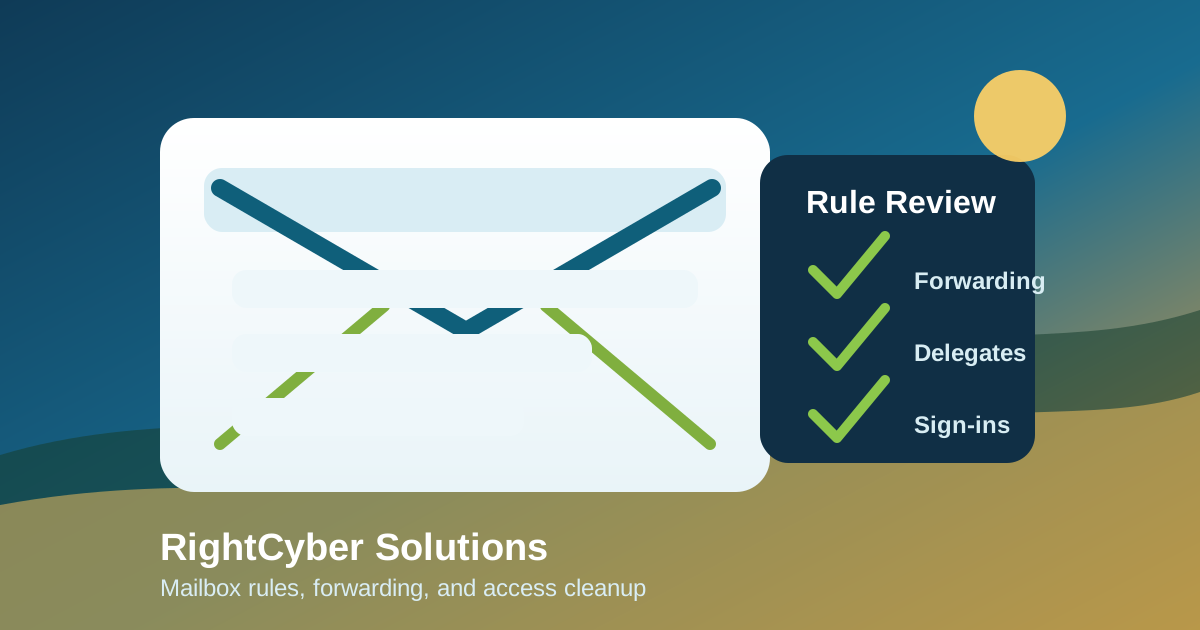
RightCyber helps businesses turn the review into a checklist instead of a guessing game: admin-level forwarding, inbox rules, delegates, shared mailbox members, group membership, recent sign-ins, and third-party app access all get reviewed together.
Watch invoice and payment conversations closely
Invoice email is a favorite target because it gives a criminal context. If someone can read the conversation between a business and a vendor, they can wait for the right moment to send a fake payment-change request or alter banking instructions. The message may look believable because it follows a real thread.
A cleanup should pay special attention to accounts that handle accounts payable, accounts receivable, payroll, ordering, banking, and management approvals. Those mailboxes may need stricter rules around forwarding, multifactor authentication, mailbox delegation, and external warnings.
For a local shop, clinic, contractor, nonprofit, or professional office, one changed invoice can create a serious mess. Finding suspicious forwarding early is much easier than unwinding a payment that went to the wrong place.
Stale delegates and shared mailboxes need the same cleanup
Forwarding is not the only way email leaks. A former employee may still have access to a shared mailbox. A manager may have delegate access they no longer need. A temporary helper may still be able to read scheduling or billing email. A vendor may have been added during a project and never removed.
Shared mailboxes are especially easy to forget because they often serve a real purpose: info@, billing@, service@, dispatch@, or office@. The mailbox keeps working, so membership does not get reviewed unless someone makes it part of the process.
A good review lists every shared mailbox, who can open it, who can send from it, and whether each person still needs that access. It should also check whether former users were disabled correctly and whether their old mailbox was converted, delegated, or forwarded after they left.
Recent sign-ins can show whether the rule came from normal use or trouble
When a suspicious rule appears, the next question is how it got there. Recent sign-in history can help. Did the account log in from an unusual location? Was there a sign-in from a device the employee does not recognize? Did the rule appear shortly after a failed MFA prompt, password reset, or phishing email?
Microsoft 365 or Google Workspace sign-in records are not perfect, but they give useful clues. They can help separate a poorly documented business setting from a possible account compromise. That distinction matters because the response may include password resets, MFA review, session revocation, device checks, and a broader look at related accounts.
RightCyber can review the technical evidence and explain it in plain language so the owner knows whether this is a cleanup item, a security incident, or both.
Make mailbox cleanup part of employee changes
Email settings should be reviewed whenever an employee joins, changes roles, or leaves. A new role may need access to a shared mailbox. A departing employee may need mail preserved for records, but that does not mean their account should stay active or keep forwarding to someone without documentation.
The safest process is written down: disable sign-in when appropriate, preserve needed mailbox data, remove mobile devices, review forwarding, remove unneeded delegates, update shared mailbox membership, and confirm that password resets and vendor portals no longer depend on that user’s inbox.
This does not have to be complicated, but it does need to be consistent. The worst email risks often come from small exceptions that nobody remembers six months later.
Turn the cleanup into a repeatable email security habit
A one-time cleanup is helpful. A recurring review is better. Businesses that depend on email should schedule a mailbox rule and access review at least a few times a year, plus after employee departures, vendor changes, suspicious messages, or financial-process changes.
The review should produce a short record: what was checked, what was removed, what was approved, and what needs follow-up. That record helps the business avoid redoing the same investigation every time someone asks whether forwarding, delegates, or shared mailbox access are under control.
RightCyber Solutions helps Northeastern Colorado businesses secure Microsoft 365 or Google Workspace, review mailbox forwarding and rules, clean up stale access, and connect email security with managed IT support. If your business handles invoices, payroll, customer requests, or vendor approvals by email, a focused mailbox cleanup is a smart next move.
FAQ
What are email forwarding rules in a business mailbox?
Email forwarding rules send copies of messages to another address or redirect certain messages based on conditions. They can be legitimate, but hidden or undocumented rules can expose business email outside the company.
How can a Colorado business find suspicious inbox rules?
The safest approach is to review rules from the admin side of Microsoft 365 or Google Workspace, then compare them against a list of approved business workflows. The review should include forwarding, redirects, delegates, shared mailbox access, and recent sign-ins.
Why do invoice mailboxes need extra protection?
Invoice and payment conversations give criminals context they can use for fraud. If an attacker can read those threads, they may send believable payment-change requests or intercept vendor communication.
Can RightCyber help clean up Microsoft 365 or Google Workspace email settings?
Yes. RightCyber can review Microsoft 365 or Google Workspace forwarding, inbox rules, shared mailboxes, delegates, sign-ins, and third-party access for businesses across Northeastern Colorado.